Light is significant in the relationship between several
aspects of Japanese life and culture. Relationships which are both spiritual
and functional. Architecturally, light is used as a tool to heighten senses,
and help promote and manipulate the balance between nature and spirit, space
and time, public and private, and life and death.
he quest for balance is an intrinsic cultural characteristic
of the Japan, which is based on the teachings of Far East mysticism, specifically
Budhism. The concept of “qi “ is the basis of these teachings,
and is defined as the essence of all things. “Qi” consists of
two parts, yin and yang. Yin and yang are opposite characteristics which must
be appreciated equally in order for the “qi” to be in balance.
The concept of the “qi” is applied to many aspects of life, but
is primarily related to human characteristics such as weak verses strong,
quiet verses action, intuitive wisdom verses rational thought, but it can
also relate to other modes of thought, such as harmony and competition and
religion and science. Balance does not have to occur simultaneously throughout
time. The key idea is the appreciation of both sides, so when one is more
dominant at certain times, a person can find good in all situations.
This concept can be more easily understood by looking
at our western culture and how it relates. In western society, we are preoccupied
with the yang aspect of the “qi”. We value strength, action, and
science, among other values, we neglect to attempt to find an appreciation
for other qualities. It can be argued that these values have led to many of
our greatest successes, which is probably true. We attempt to attain and accomplish
these societal values with such vengeance that it leaves many with a spiritual
void where as in eastern culture success is measure from within oneself and
the appreciation for each on there own terms.
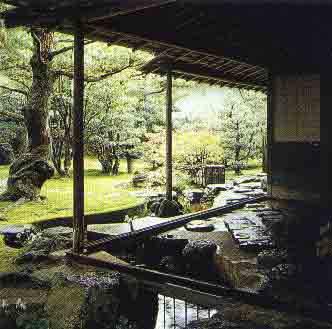
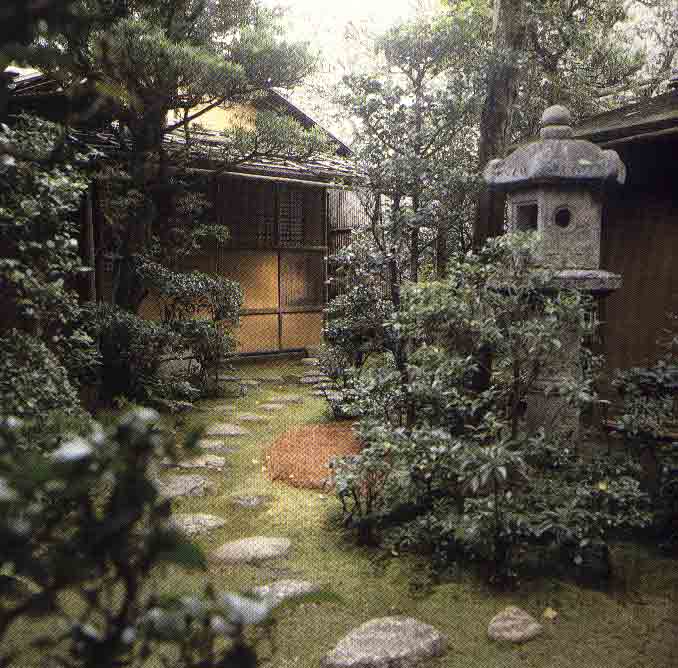
In Japanese architecture, the inter play between shadows
and light is used to create a harmony within spaces to create a harmony for
occupants. This harmony relates to the concept of “qi”. The exterior
of buildings are perceived as the manifestation of the light while the interiors
are the domain of the shadows. The goal is the creation of a symbiotic relationship
between both which leads to a balance between man and the natural surroundings.
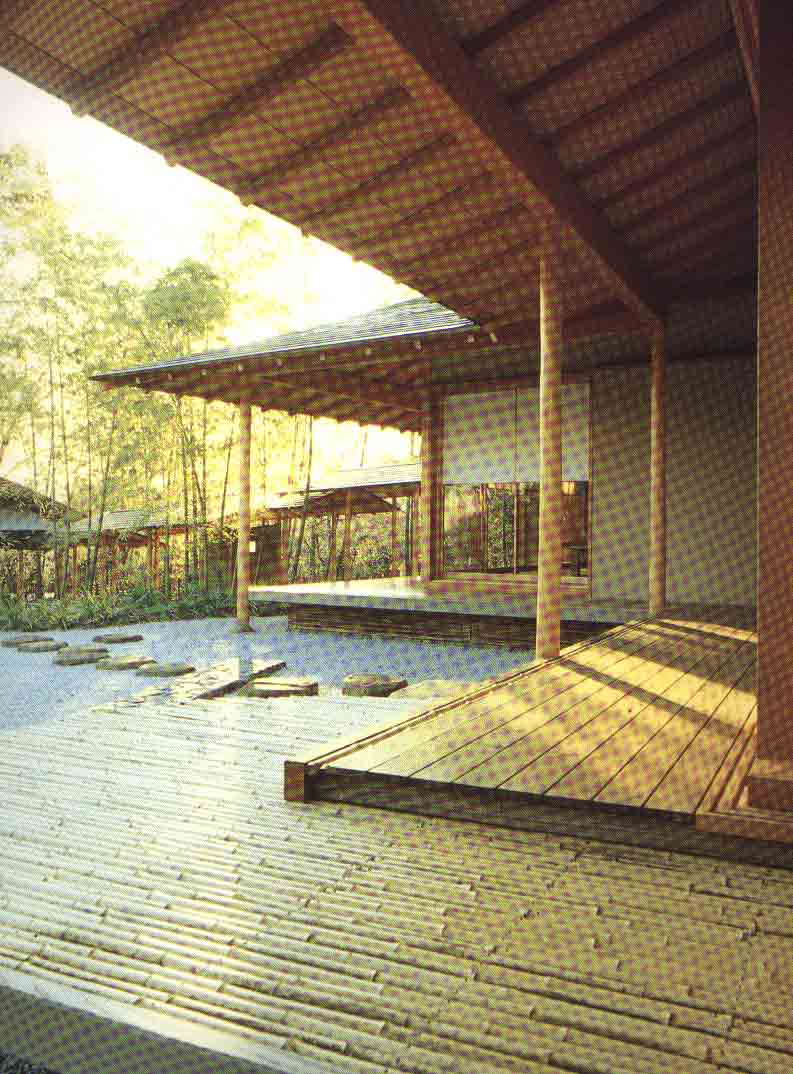
Traditional Japanese architecture is characterized
by large roofs and long eaves. The roof and the floor are the primary architectural
elements, and there is less of an emphasis on wall. The open plan which is
the product of this architecture creates the impression of this relationship
with nature. The true Japanese aesthetic of harmony is found in the relationship
between the shadows and light. The shadows become the yin and the light becomes
the yang. The appreciation of the intrinsic qualities found within each and
the transformation between them is what allows these spaces to promote a spiritual
harmony.
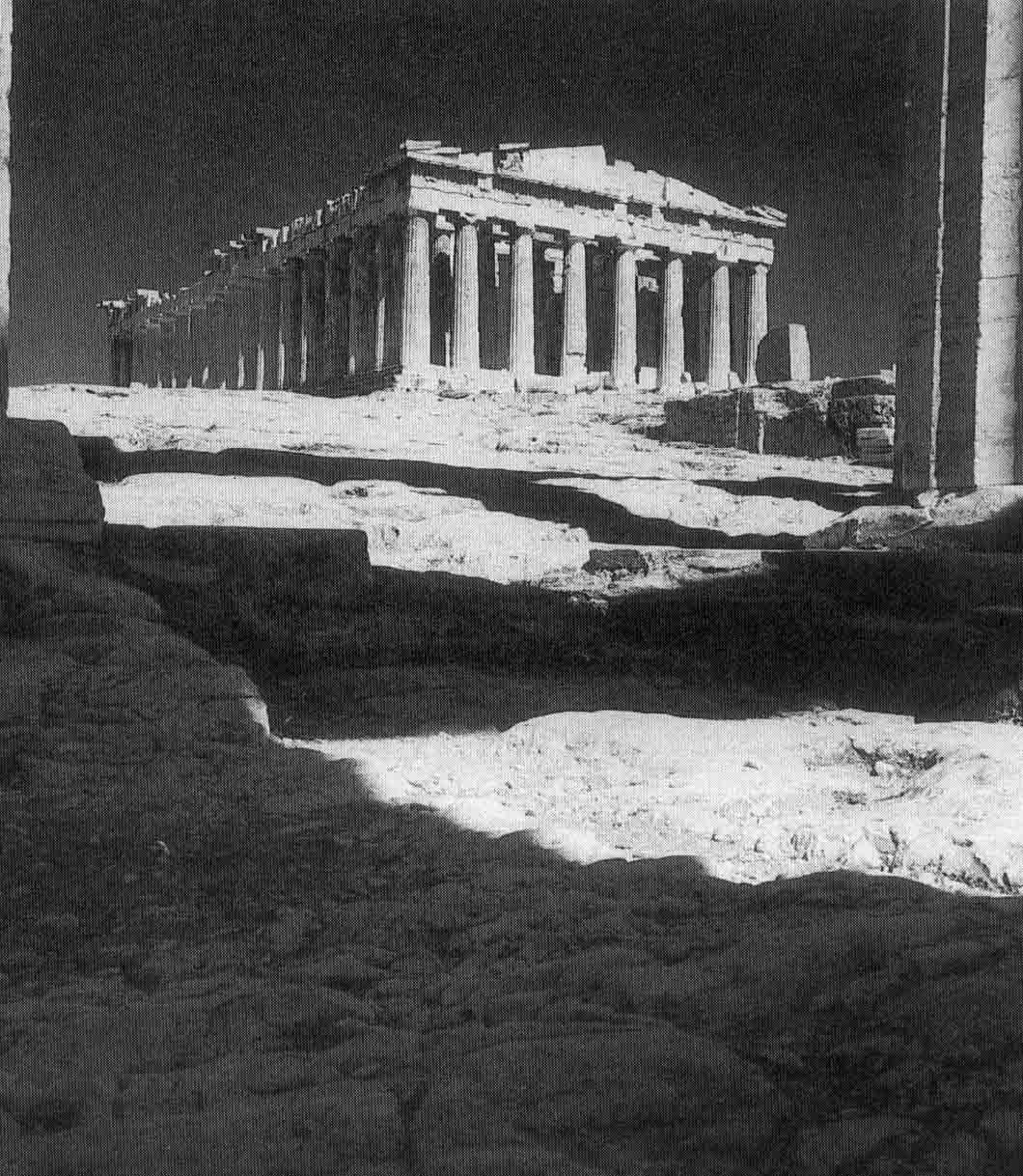
The focus of Japanese architecture is the interior
, buildings emanate from interior to the exterior. Emphasis is placed on the
subtle changes and the details within. It is interesting to compare this to
early Western architecture, such as Greek temples, in which a major emphasis
is placed on the exterior of the building. These temples were created to dominated
the landscape. Light enhances the monumentality of these structures. They
were clearly meant to be viewed from the exterior to display strength and
solidity. The relationship between interior to exterior is from outward in,
whereas in Eastern building it is from inside out. An example of this is the
use of columns. Greek temples place an extreme heroic emphasis on them while
in the East they are recessed under large eaves.
The East and West have extreme differences in there perceptions of the relationship between space and time. These perceptions stem from spiritual beliefs as well as the availability of space. In the West we perceive time as being limited, and we have an abundance of space therefore we place an extreme emphasis on time. The West attempts to condense space with the goal of saving time. The movement between points is not about the experience, idealistically it is as efficient as possible. Space is obliterated for the sake of time. In the East the opposite is true, spiritual beliefs relate to the idea that this life is part of a continuum.
Japan specifically is a very dense with a limited amount
of land area, therefore a primary emphasis is place on space and the perceived
expansion of it. The open plan is a product of this necessity.
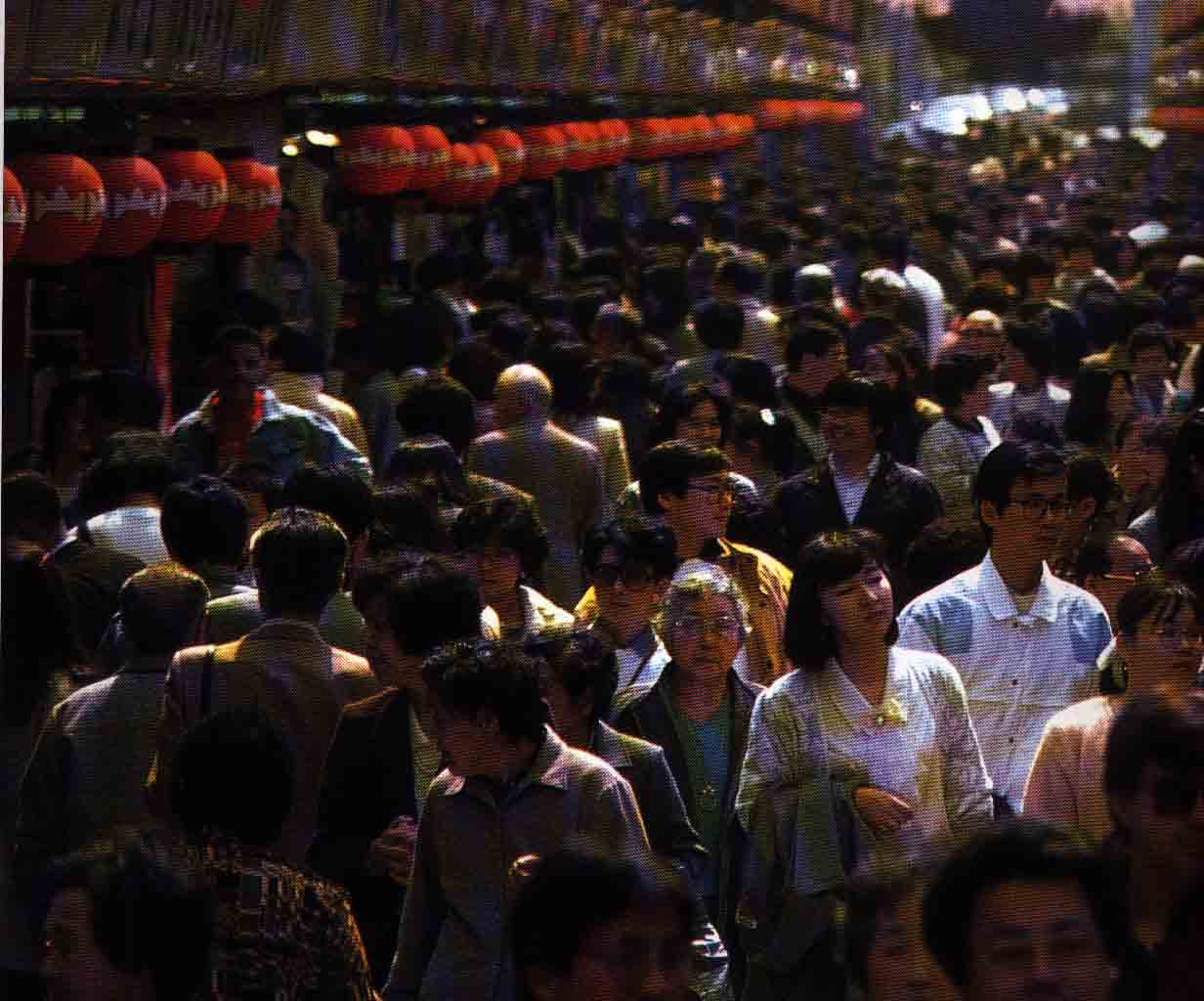
The use of urban areas displays this relationship of
space. The city is perceived of as the living area for its occupants. Public
spaces take on a great importance. People seldom meet within there homes,
human interaction is in the realm of the streets and restaurants. Homes are
perceived as the bedroom areas, and are considered private, this one of the
reasons for the ritual of taking ones shoes off before entering a residence.
There is a strong sense of shared space, because it is not possible for each
to have there own lot for certain functions. Within cities during the daytime
the residences and stores open up to the streets, walls are remove the light
and life of the city and exterior is allowed to penetrate into these places.
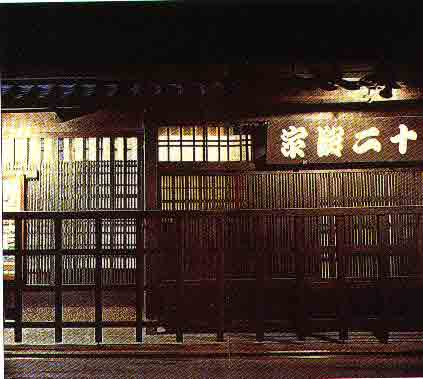
During night the city closes up, but the existence
of the translucent nature of the walls allows the light of the interior to
spill out into the streets, therefore the private lives found within the interior
spaces still give a life to the city as a whole. Light is very representational
of a way of urban life which is much different than that of the west. The
West is much more private, interior spaces are of greater importance than
exterior. The streets and exteriors are the in-between places of which are
neglected for the sake of speed as movement is done between place to place.
The Japanese enlarge limited space through the manipulation of time spent within spaces. Changes in scale, path, sensations, and the use of rituals give lead to an extended experience of space. Light is a critical element used in accentuating path and the senses. The availability of light delineates direction of movement while enhancing visual details within the path. The absence of light allows for the heightening of alternative senses which might otherwise be neglected due to our natural dependence on vision. An appreciation of all sensual experiences is fostered.
Light is used to delineate these paths and therefore
becomes a symbol of guidance. Japanese tea rooms are known for these ritualistic
paths. Often the ceremonies where held at night, therefore the Japanese lanterns
became a necessary part of this movement.
These lanterns found there way into alternative ceremonies
and became a major part of the culture.
Specifically lanterns are symbolic of the relationship between life and death.
One of the most widely known ritual is one relating to mourning. The placement
of a paper lantern within a stream is representative of a quest for guidance
of the living through the mourning process. The balanced juxtaposition of
fire and water is the balance which is sought. Lanterns are also used ritualistically
for the dead. Ceremonies are celebrated at certain times where the lanterns
are meant to give guidance for the return of lost souls.
The Japanese are in a constant quest for balance in all aspects of life. This can be seen in there rituals and the way they construct the places they live and work. The balance can be seen in the relationship between beliefs and the environment in which they construct. The Spirituality of the people creates this type of life and the architecture reflects it and therefore enhances and solidifies the belief.
Bibliography
Ashihara, Yoshinobu. The Hidden Order. New York: Kodasha International, 1989
Isozaki, Arata. The Island Nation Aesthetic. London: Academy Editions, 1996
Kurokawa, Kisho. Intercultural Architecture, the Philosophy
of Symbiosis.
Washington D.C. AIA Press, 1991
Nitschke, Gunter. From Shinto to Ando. London: Ernst & Sohn, 1993